A lot of people get Ultherapy these days, with talk about the SMAS layer and collagen and so on—but let’s skip the complicated stuff.
Today, I want to talk specifically about the lifting effects on different areas of the face. It was surprisingly hard to find straightforward information on this, even after a lot of searching.
First, let’s go straight to the conclusion: the highest satisfaction levels usually come in this order: sagging cheeks and double chin >>> “deep cheek” (jowls) > nasolabial folds.
Now, let’s break down the reasons for that. I’ll also talk about alternative options for areas where Ultherapy has certain limitations. Of course, individual preferences may vary.
Nasolabial Folds
There’s a lot to do in this area. You need to lift sagging fat, fill in the sunken “triangle zone,” and smooth out the fold itself. On top of that, because it’s mostly fatty tissue rather than fascia, Ultherapy often doesn’t feel very effective here.
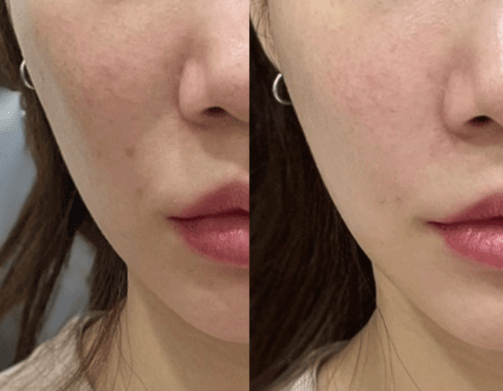
That’s why I usually recommend filling the hollow areas first. (Everyone has some degree of hollowing, though it varies. Because of the risk of filler migration, I tend to suggest Radiesse or Sculptra.)
If you’re strongly opposed to volumizing treatments, I’d recommend Shurink or fat-dissolving injections over Ultherapy. If your cheekbones aren’t too prominent, you can also consider thread lifting.
Ultherapy is expensive, so it feels a bit wasteful to use it on an area where results aren’t as noticeable.
Jowls (often called “deep cheek” in Korean)
Many people refer to them as “deep cheeks,” but the correct term in English is “jowls.” If they’re severe, you can even develop marionette lines.
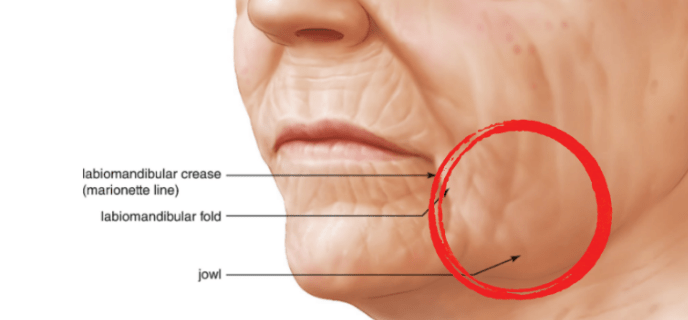
However, you can’t directly target this area with Ultherapy because there are important nerves running through it. High-intensity heat could temporarily damage those nerves, so applying Ultherapy directly there is contraindicated.
That means you’re essentially limited to treating the area from the side (laterally) to pull it indirectly.
Are there alternatives?
Yes, there are. Devices like InMode or Onda that focus on fat reduction don’t concentrate their heat energy in one point, so you can treat jowls directly without worrying about nerve damage.
You could also use thread lifting to pull the area taut. And if marionette lines are already visible, you can soften those by injecting fillers—like Sculptra, or Radiesse—below them.
Because each face is different, you really need a personalized plan. For that, it’s best to come in and consult a specialist in person.
Sagging Cheeks and Double Chin
These two areas tend to show the best results and highest satisfaction with Ultherapy. They’re spots where fat accumulates due to gravity, and they’re also easier to target directly. In Ultherapy guidelines, most shots are focused on the cheeks and double chin.

For mild cases, I recommend starting with around 300 shots. If sagging is more pronounced, around 400 shots is typical.
If you have a lot of excess fat, it may be better to reduce some of it first with InMode or Onda before starting Ultherapy.
Some people go to a clinic and just say, “Give me 600 shots all over my face,” then they get it under sedation and leave. That can leave you with hollow cheeks and regret afterward.
We live in an era where it’s important for patients to do some research before getting any procedure. Whichever clinic you choose, make sure it’s one where experienced medical professionals consult with you directly. Good luck!
 Gangnam Tatoa Clinic : Korean skin care, face contouring
댓글 남기기